


ARCO Rewards
4.951.00 Reviews
App Specs
- Version
- 26.5.0
- Updated On
- License
- Free
- Downloads
- 100,000+
- Developer
- PAR Retail
- Categories
- Auto & Vehicles
- Platform
- Android
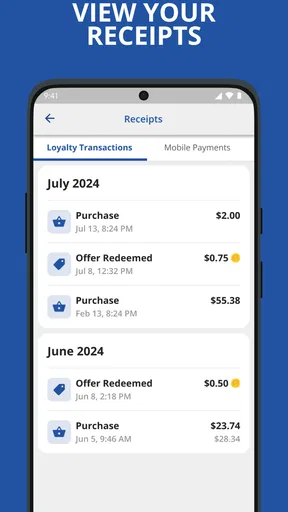
Screenshots
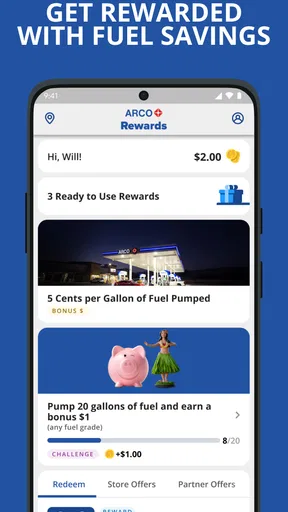
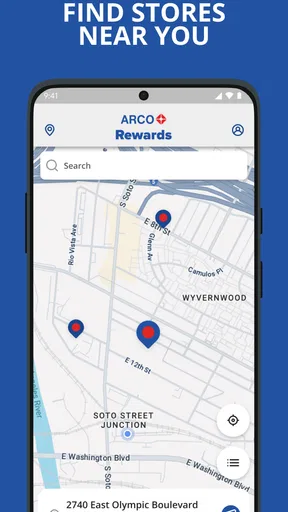
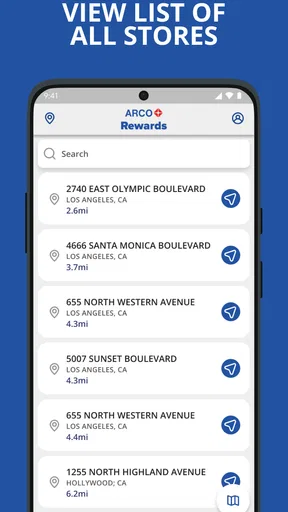
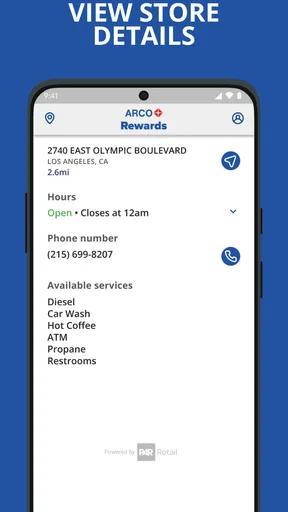
 Analysis by AppCompare
I found ARCO Rewards most useful when I treated it as a shared household tool rather than just another fuel app. Its purpose is straightforward: ARCO Rewards members can earn rewards and use them to reduce the cost of fuel. That makes it relevant for anyone who regularly fills up an ARCO vehicle, but it becomes especially practical when more than one person in a household drives and everyone needs a simple way to stay aligned.
The app sits in the Auto & Vehicles category and is developed by PAR Retail. It is free to use, rated for Everyone, and currently listed as version 26.5.0 for devices running Android 9 or later. I like that the basic idea is easy to understand before opening the app: this is not a route planner, a maintenance log, or a broad comparison service. It is centered on the relationship between ARCO Rewards membership, fuel purchases, and savings.
That focus is also the first important trade-off. If I want directions, tire reminders, repair records, or prices from several fuel brands in one place, I need another app. If my regular goal is to make ARCO fuel purchases more useful and keep track of the rewards connected with them, this app has a much clearer job.
How ARCO Rewards fits into a shared household
When several people drive the same car, I find it helps to decide who keeps the ARCO Rewards account organized before anyone relies on it at a fuel stop. This section looks at a simple household routine for coordinating the membership, keeping account responsibility clear, and making the rewards process easier for occasional drivers to follow.
A realistic week with more than one driver
Imagine a household where one person commutes during the week, another uses the car for school or errands, and a third family member occasionally borrows the vehicle. The main difficulty is not always finding a station. It is remembering which account is connected to the household’s ARCO activity and making sure rewards do not become an afterthought.
In that situation, I would use the app as the central reference point for the person responsible for the Rewards membership. Before a regular fill-up, that person can check the account and understand whether there is a reward available to apply toward fuel. Afterward, the household has a clearer place to return to instead of relying on paper receipts, memory, or several unrelated notes.
The useful detail here is the division between shared driving and shared account responsibility. The app does not need every driver to manage everything. A household can agree that one adult keeps the membership organized while other drivers follow the same routine when they use the vehicle. That reduces confusion, especially when a car is used by people with different levels of interest in fuel prices and loyalty programs.
Worth Reading Before You Choose

EA SPORTS FC Mobile 26 Is a Bigger Football Game, but It Takes Time

Flipboard Shows What News Apps Must Do Beyond the Feed

Switching to Android Auto Means Rethinking Your Driving Routine

Google Calendar Makes a Crowded Week Easier to Manage

Ludo King Makes the Most of the Minutes Between Plans

Baby Panda World Brings Quick Play to Modern Phones, but Its Game Library Feels Busy
I would not hand the account over casually to every person who borrows the car. A rewards account represents accumulated value, so the practical approach is to decide who owns the login and who is merely using the vehicle. That boundary matters more than installing the app on every phone.
What setup feels like in practice
The first step is joining or using an ARCO Rewards membership, then making sure the app is connected to the correct account. I recommend doing that before standing at the pump. Setting things up while trying to refuel creates unnecessary pressure, and it is easier to notice a sign-in mistake when there is no queue behind you.
For a shared household, I would also decide which device is the primary one. The person who normally handles fuel purchases can keep the app there, while other household members simply know how the rewards process is supposed to work. If the app is installed on several devices, everyone should still understand which account is the active one. Multiple people making changes without coordination can be more confusing than having a single organized account holder.
One of my more useful habits would be checking the account before a planned fill-up rather than assuming the reward will be applied automatically. The store summary makes clear that rewards can be applied for fuel savings, but the exact moment when a user should act is the sort of detail worth confirming during normal use. A quick pre-fuel check helps avoid discovering an available benefit only after the transaction is complete.
This is also where the app’s narrow purpose helps. There are fewer unrelated tools competing for attention, so the household routine can stay simple: open the app, review the membership and available reward information, then use the benefit when buying fuel. It is not a complicated budgeting system, and I would not try to turn it into one.
Keeping coordination simple without inventing family controls
I would describe the coordination model as informal rather than family-managed. The app is useful for a household that can agree on a routine, but I would not expect it to replace a family calendar, a shared expense tracker, or a conversation about who is driving and who is paying. Those are separate jobs.
A good arrangement is to make one person the account coordinator and give the other drivers a clear instruction: use the ARCO Rewards membership when purchasing fuel, then mention any issue immediately. This avoids a common problem with shared devices, where one person signs out, another uses a different account, and nobody knows which rewards balance reflects the household’s actual activity.
For couples or roommates, the best setup may be slightly different. If each person pays for fuel independently, sharing one rewards account may be convenient only if both agree on how the savings are used. If one person pays for a vehicle owned by the household, centralizing the account is more natural. The app can support either routine, but the agreement has to come from the users.
My practical tip is to avoid treating the app as proof that every fuel expense has been shared fairly. It can help with rewards, yet it is not a substitute for recording who paid, which vehicle was filled, or whether a trip was personal or household-related. Anyone needing that level of detail will be better served by pairing it with a dedicated expense app.
Age, trust, and the right person to manage the account
The Everyone content rating makes the app approachable for a broad audience, but that does not mean every household member should have equal control over the account. A younger driver may be perfectly capable of using the membership at the pump while still not being the right person to manage the account details or decide when rewards are spent.
I see the app working best when an adult household member handles account access and explains the basic routine to younger or less experienced drivers. That is not because the app is difficult; it is because rewards have value and shared accounts benefit from one clear point of responsibility. The driver needs to know what to do, while the account holder needs to know what happened.
This arrangement is also useful for older relatives who share a vehicle but do not want to learn another complicated service. A household member can help with the initial setup and keep the process visible, while the driver uses the membership during ordinary refueling. The app’s focused purpose makes that handoff easier than teaching someone a large all-in-one automotive platform.
I would still be careful with a shared phone. If the device belongs to several people, leaving an account open may expose account information to anyone who uses it. The safer household habit is to decide whether the primary account should remain signed in and to protect the device accordingly. That is a trust and device-management choice, not a feature I would assume the app handles for me.
Where it beats ordinary alternatives
The usual alternative is doing nothing beyond paying at the pump. That is the simplest option, but it also means the household has no dedicated place to manage ARCO Rewards activity. For a driver who already buys ARCO fuel regularly, the app is more purposeful than relying on memory or keeping a physical card tucked in a wallet.
Another alternative is a general fuel-price app. That may be better for someone whose only goal is finding the cheapest nearby station across different brands. ARCO Rewards serves a different need: it connects membership rewards with fuel savings inside the ARCO ecosystem. If I frequently switch brands based on price, I would not use this app as my only fuel tool.
Banking and budgeting apps are also useful alternatives for tracking spending, but they do not replace the rewards workflow. A bank app can show the charge after the fact; it is not designed around applying an ARCO reward to fuel. In my view, the strongest combination for a household is ARCO Rewards for the membership benefit and a separate finance tool for the full record of vehicle costs.
That distinction prevents disappointment. I would recommend this app to a regular ARCO customer who wants a focused rewards experience. I would skip it if I rarely visit ARCO stations, want a universal fuel wallet, or expect detailed vehicle management in the same application.
Small habits that make the app more useful
The first habit is checking before fueling. Even if the process becomes familiar, a pre-purchase look is a better routine than assuming every reward is already being used. It also gives the account holder a chance to explain the process to another driver before that person reaches the pump.
The second is keeping the household’s account rule written somewhere simple, such as a shared note: which membership to use, who manages it, and where to report a problem. That may sound basic, but it prevents the most common shared-device confusion. The app provides the rewards connection; the household provides the operating agreement.
The third is separating reward decisions from urgent refueling. If the tank is nearly empty and a driver is in a hurry, that is a poor moment to troubleshoot account access. I would set up the membership at home, review the app calmly, and only then make it part of the normal fuel stop.
A fourth useful habit is checking the app after an unusual transaction rather than only during routine fill-ups. If someone else drove the car, a vehicle was borrowed, or a payment method changed, reviewing the account can help keep the household’s understanding current. I would not treat that review as a full financial audit, but it is a sensible way to catch misunderstandings early.
Performance, reach, and everyday expectations
The app is free, which removes the main barrier to trying it for an ARCO Rewards member. Its listing shows an average rating of 4.9 from around 1.1 thousand ratings, with over 100 thousand installs. Those figures suggest that the focused rewards concept has attracted a meaningful user base, although a high store rating should not be mistaken for proof that every household workflow will feel effortless.
Because the app is tied to a specific fuel brand, its usefulness depends heavily on location and driving habits. Someone who passes ARCO stations during a daily commute has a natural reason to keep it available. Someone who travels between areas with different fuel options may find the brand-specific focus limiting. I would make that decision based on actual routes, not on the app’s rating.
The current version, 26.5.0, supports devices running Android 9 or later. For someone using an older phone, that requirement is worth checking before planning a shared-device setup. On a newer household phone, the more important question is not raw compatibility but whether the chosen account holder can access the app reliably when fuel is needed.
Who should use it and who should pass
I think ARCO Rewards is a good fit for regular ARCO customers, households that share one or more vehicles, and drivers who prefer a focused rewards account instead of a large automotive dashboard. It is especially appealing when one person can coordinate the membership while several people benefit from the resulting fuel savings.
I would be less enthusiastic for a driver who wants fuel-price comparisons across many brands, automatic household expense splitting, maintenance reminders, route planning, or a complete record of vehicle ownership. Those needs are valid, but they sit outside this app’s central purpose. Adding more applications may be necessary, and that is better than expecting one rewards tool to manage every automotive task.
I would also skip it if ARCO is only an occasional stop and the household does not want another account to maintain. A free app still has a cost in attention: remembering the login, teaching other drivers the routine, and deciding who controls the membership. If the benefit will rarely be used, the simpler alternative may be paying normally and avoiding the extra coordination.
My household verdict
After looking at it as a shared-use app, I see ARCO Rewards as a practical specialist rather than a complete car companion. Its strength is the direct connection between an ARCO Rewards membership and fuel savings. That narrow focus makes it easier to explain, easier to fit into a regular refueling routine, and more useful than a forgotten loyalty card for a household that already chooses ARCO.
The key is setting boundaries early. Choose one account coordinator, agree on how other drivers use the membership, and check the app before buying fuel rather than trying to solve access questions at the pump. Those small decisions do more for the experience than installing it on every family phone.
My final recommendation is simple: if ARCO is part of your normal driving routine, I would try it, especially where several household members share fuel responsibilities. If you need brand-neutral price hunting or detailed vehicle finances, pair it with another tool or choose a broader alternative. For the right household, the best reason to use it is not complexity but clarity: one focused place to connect ARCO Rewards with the fuel savings you are already in a position to use.
Pros
- Earn rewards for completing eligible purchases and activities.
- Clear progress tracking helps users monitor available benefits.
- Offers may provide extra value on everyday spending.
- Simple mobile access makes rewards convenient to check.
- Useful for users who regularly shop with participating brands.
Cons
- Rewards depend on participating merchants and available promotions.
- Some offers may include expiration dates or redemption limits.
- Savings can be limited if you rarely use partner businesses.
- The app may require personal and transaction-related information.
- Reward processing or redemption may not always be immediate.
FAQs for ARCO Rewards
What is ARCO Rewards and how does it work?
ARCO Rewards is a loyalty application designed for customers who purchase fuel or other eligible products at participating ARCO locations. After creating an account, users can typically connect the app with a supported payment method, identify themselves during a transaction, and receive points, discounts, or other promotional benefits. Available rewards and earning rules may vary by location and current program terms.
Is ARCO Rewards free to download and use?
Yes, the ARCO Rewards app is generally free to download and use on a compatible Android or iOS device. However, using the app does not make fuel or store purchases free, and some offers may require qualifying transactions or specific payment methods. Before relying on a promotion, check its expiration date, participating locations, and any purchase restrictions shown in the app.
How can I earn and redeem rewards in ARCO Rewards?
Rewards are usually earned by completing eligible purchases at participating ARCO stations while using the account or payment method linked to the program. Depending on the current offer, benefits may appear as points, cents-per-gallon savings, coupons, or limited-time promotions. Redemption instructions can differ, so review the offer details carefully before paying and confirm that the location accepts it.
Does ARCO Rewards work at every ARCO station?
Not necessarily. Participation, available promotions, payment features, and redemption options can vary between ARCO locations, regions, and independently operated stations. The app may use your location to display nearby participating sites, but users should still read the terms attached to each offer. If a reward is important to your purchase, verify eligibility before beginning the transaction.
What should I do if my points, discount, or transaction does not appear?
If an eligible purchase is missing from your ARCO Rewards account, first confirm that you used the correct account, payment method, and participating station, then allow time for the transaction to synchronize. Keep your receipt and record the date, location, and purchase details. If the issue remains, contact ARCO Rewards support through the app or official customer-service channel.


